
Surfing Without Turnstiles: The World Surf League’s Data Dilemma
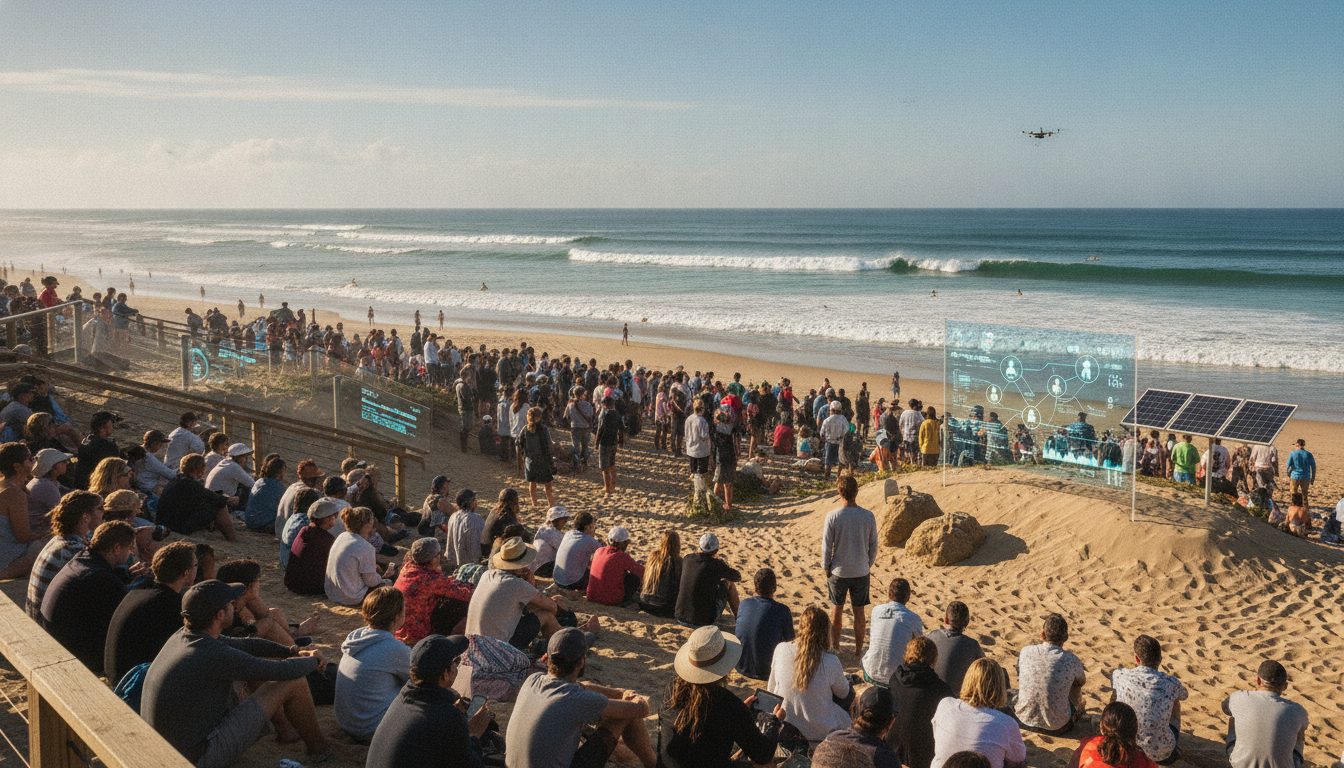
If you run a professional sports league, most of your fan insights come from ticket sales and in-venue spending. Not so for the World Surf League (WSL). Their events play out on open public beaches, where anyone can show up—no ticket stubs, no gates, no easy way to know who’s there.
Still, the WSL has been steadily building out its audience intelligence, trying to map and grow its fanbase. With surfing gearing up for its third Olympic showing at LA28, this work is only getting more urgent.
In most sports, ticketing data is the backbone: it tells you who shows up, how often, and what they buy. But WSL operates without that luxury. Every digital trace—whether it’s a web visit, a merch order, or just a click on the WSL app—matters that much more.
As surfing’s global profile rises (thanks to the Olympics and innovations like wave pools), the WSL knows it has to get sharper about identifying and nurturing that next crop of fans.
Building a Fan Intelligence Framework Without Ticket Sales
Alyssa Meyers, writing for Marketing Brew, summed up the WSL’s starting point: while staff and event teams had a gut sense of the audience, they didn’t have “fully foundational, data-backed insights” to lean on. Travis Tan, who used to oversee global and North America marketing, said this limited the league’s ability to truly segment and target its audience.
So the WSL teamed up with Two Circles, a firm that helps sports brands make sense of fan data. Without tickets, they had to get creative. They built their fan intelligence muscle using several alternative data streams:
- Brand trackers and fan surveys for direct feedback on who fans are and what they care about.
- Merchandise order data from their online store, offering clues about loyalty and tastes.
- Digital engagement stats from WSL’s app, fantasy contests, and bracket challenge—helpful for seeing which content grabs people.
- Results from paid ads and social listening, which reveal trends and sentiment in fan conversations across platforms.
Piece by piece, this data mosaic lets the WSL see its audience in higher definition than any single source could. For example, tracking who dives into the fantasy game can highlight those obsessed with competition, while social listening surfaces wider community interests or concerns.
From these sources, Two Circles and the WSL carved out four fan segments: superfans, committed fans, lifestyle fans, and younger “next-wave” fans. Corey DeLaney, who leads marketing consulting at Two Circles, says this structure lets the WSL tailor its communication. A superfan doesn’t need a rules primer, but a lifestyle fan just might.
This segmentation isn’t far off from what Major League Soccer’s Fan Genome platform does, only with beach events instead of stadiums. The aim is the same: nudge fans “down the funnel” toward greater involvement and, eventually, conversion. The process starts with survey data, then layers in digital actions and purchases to flesh out each group.
Segmenting the Surfing Audience: Four Fan Types
Understanding the nuances between these four types is the core of WSL’s outreach:
- Superfans: These are your experts. They know the athletes, the stats, the inside stories. They want deep dives: live streams, data breakdowns, behind-the-scenes features.
- Committed fans: They follow the action and care about the storylines, even if they don’t have all the details memorized. They respond to timely updates, reminders, and content that strengthens their bond with the league.
- Lifestyle fans: Drawn by the look, feel, and culture of surfing, not just the competition. They gravitate toward athlete spotlights, surf culture content, and material that goes beyond the contest scoreboard.
- Next-wave fans: These are the newcomers—often younger—who found surfing through social media, Olympic hype, or a local wave pool. They need the basics: how contests work, how scoring happens, and what makes certain athletes stand out.
These segments aren’t set in stone. As fans interact with various content—maybe a highlight reel one day, a Q&A the next—the WSL updates their profiles and offers relevant next steps. If a next-wave fan clicks on Olympic highlights, for example, they might get nudged toward beginner guides or athlete interviews to draw them further in.
Why This Approach Matters for Businesses Without Traditional Data
If you run a business without direct customer data—no tickets, no subscriber lists, no in-store purchases—the WSL’s experience should catch your eye. You’re not out of options. With surveys, digital engagement numbers, and ecommerce insights, you can still build meaningful audience profiles.
Think of a brand that mostly sells through resellers or runs free public events. Figuring out who your real audience is can feel like a guessing game. The WSL’s approach shows that, with smart data collection and the right analytics partner, you can compensate—and even spot behaviors ticket sales might miss entirely.
As LA28 draws closer, the WSL’s big bet is on using its audience insights to bring new fans into the fold. They’re especially focused on lifestyle and next-wave fans—people who might not watch every contest but are drawn to the broader scene. For these groups, on-demand and social content become the main entry points, helping casual viewers find their place in the surfing world.
Content and Athlete-Driven Engagement
The WSL’s most effective move? Putting athletes front and center. This isn’t just a trend—it’s smart business. The league works alongside surfers on social posts and supports their personal brands, making fan acquisition feel genuine rather than forced. Highlight reels, interviews, and behind-the-scenes bits keep interest high, especially for lifestyle and next-wave fans who care more about people than results.
Surf contests hop from beach to beach, so showing up in person isn’t realistic for most. That makes digital content the main stage. WSL invests in its app, fantasy leagues, and bracket games—not just for entertainment, but as a steady pipeline of audience data. This feedback loop powers their segmentation and keeps their content strategy nimble.
Practical Steps for Applying WSL’s Playbook
- Inventory every digital touchpoint—apps, social channels, online shop, newsletter, interactive features. Watch how users weave between them.
- Run regular surveys to plug demographic and psychographic gaps. Use incentives to draw responses, especially from less-engaged segments.
- Segment your audience by how engaged they are, not just what they buy. Craft your messaging to fit each group’s context and knowledge.
- Tap into social listening and engagement stats to sharpen your message for each segment. Track which posts, hashtags, or partnerships spark the most conversation.
- Build content with each group in mind—go deep for the diehards, offer clear intros for rookies. For example, advanced how-tos for superfans, explainers for next-wave fans.
If your digital footprint is small, look for agency partnerships or platforms to help pull together and analyze what data you have. Even small moves—like tracking newsletter signups or merch sales—can add up if you connect the dots.
My Take: Creative, But Not Without Tradeoffs
To me, the WSL’s system is resourceful and worth studying, especially if you don’t have classic ticketing data at your fingertips. It pushes you to think broadly about what counts as a signal—a merch sale, a quiz answer, an app tap. Sometimes, that surfaces patterns you’d miss if you just stared at receipts.
But there are catches. Survey and app data can be patchy, especially if your online presence is thin. The WSL’s approach leans heavily on digital and ecommerce touchpoints, which works only if your audience actually shows up online. And as Corey DeLaney put it, the absence of a “single source of truth” means you’re always working with a puzzle, not a ledger.
There’s also the risk of slicing your audience too thin or mistaking digital signals for real-world passion. Not every double-tap means a future VIP. But if you revisit and refine your segments over time, you’ll get a living, evolving view of your audience—crucial if you’re trying to grow or catch a wave of global attention like the Olympics.
One more thing: this playbook isn’t free. It takes ongoing investment in digital tools, analytics, and content creation. If you’re working with limited resources, you’ll have to decide which data sources and segments deserve your focus—otherwise, you risk spreading yourself too thin.
The Bottom Line
You don’t need tickets or turnstiles to build a fanbase with real data behind it. The WSL proves that when the usual avenues are closed, you can still get creative—combining available data, experimenting with new collection methods, and using smart segmentation to drive engagement. If your business faces similar constraints, take the hint: start where you are, test new ways to gather insights, and let audience segmentation shape your next move, wherever your fans or customers first encounter your brand.