
Artificial intelligence can feel like the Wild West of technology, with businesses keen to rope it in for competitive advantage. Yet, one question reigns supreme: should you be running AI models locally or in the cloud? Each approach has its pros and cons, and understanding these can significantly impact your bottom line.
Why Local AI?
Local AI implementations often appeal due to the promise of data privacy and quick response times. When your AI models run on-premises, your data doesn't have to travel across networks, reducing latency. This can be critically important in industries where split-second decisions are necessary.
Moreover, local AI offers greater control over your data. For businesses dealing with sensitive information, keeping data in-house can mitigate risks associated with data breaches that sometimes occur with cloud storage.
The Hardware Factor
Not all hardware is created equal, and choosing the right setup can dramatically enhance AI performance. This topic recently attracted significant interest in a YouTube video by Tina Huang, a former Meta data scientist, underscoring the importance of hardware decisions.
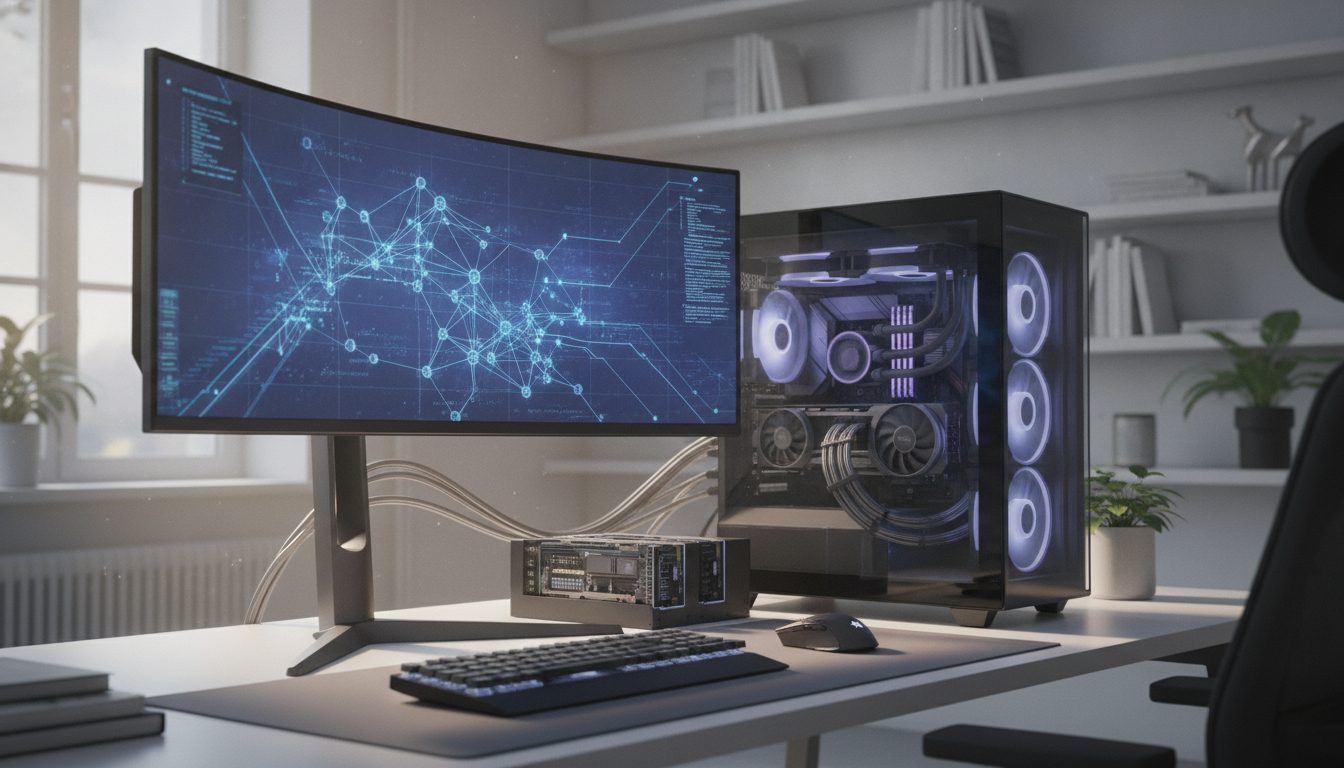
From mini-computers to powerful GPUs, the options are plentiful. Mini-computers might suffice for simple models or edge computing applications. However, for complex neural networks, investing in high-end GPUs like NVIDIA's latest releases can yield substantial performance gains.
One must also consider the balance between CPU and GPU. While GPUs are amazing at parallel processing tasks typical of AI workloads, CPUs are better for operations requiring singular, sequential tasks. A well-rounded setup often involves a synergy of both.
Local vs. Cloud: The Trade-offs
Cloud-based AI comes with its own set of advantages, such as scalability and reduced upfront costs. However, these benefits must be weighed against recurring subscription fees and potential latency issues.
Local AI, on the other hand, typically involves higher initial hardware costs but can offer long-term savings, especially if you optimize your hardware for the specific AI tasks you undertake.
Practical Steps for Implementation
Setting up a local AI environment doesn't have to be daunting. Start by evaluating your business needs and AI application complexities to determine suitable hardware.
- For straightforward tasks, consider low-power, cost-effective solutions like Raspberry Pi or Jetson Nano.
- If you're venturing into deep learning, look toward high-performance GPUs and CPUs.
- Ensure your team has the technical expertise to maintain and optimize these systems effectively.
Ultimately, your choice should align with your business strategy and operational priorities.
Conclusion
Choosing between local and cloud AI is a decision that will reflect on both performance and cost. By weighing the trade-offs, understanding hardware dynamics, and aligning these with your strategic goals, you can harness AI as a potent tool for business innovation.